The home buying process in Ontario usually feels simple until you find a home you actually want to buy. That is when the questions start. Can you comfortably afford it? Is the asking price reasonable? Is there anything about the property that deserves a closer look? What should be included in the offer? And once the seller says yes, what happens before you actually get the keys?
Knowing those answers before you are under pressure to make a decision can make buying a home much easier.
Home Buying Process in Ontario
Start With Your Budget, Not the Listings
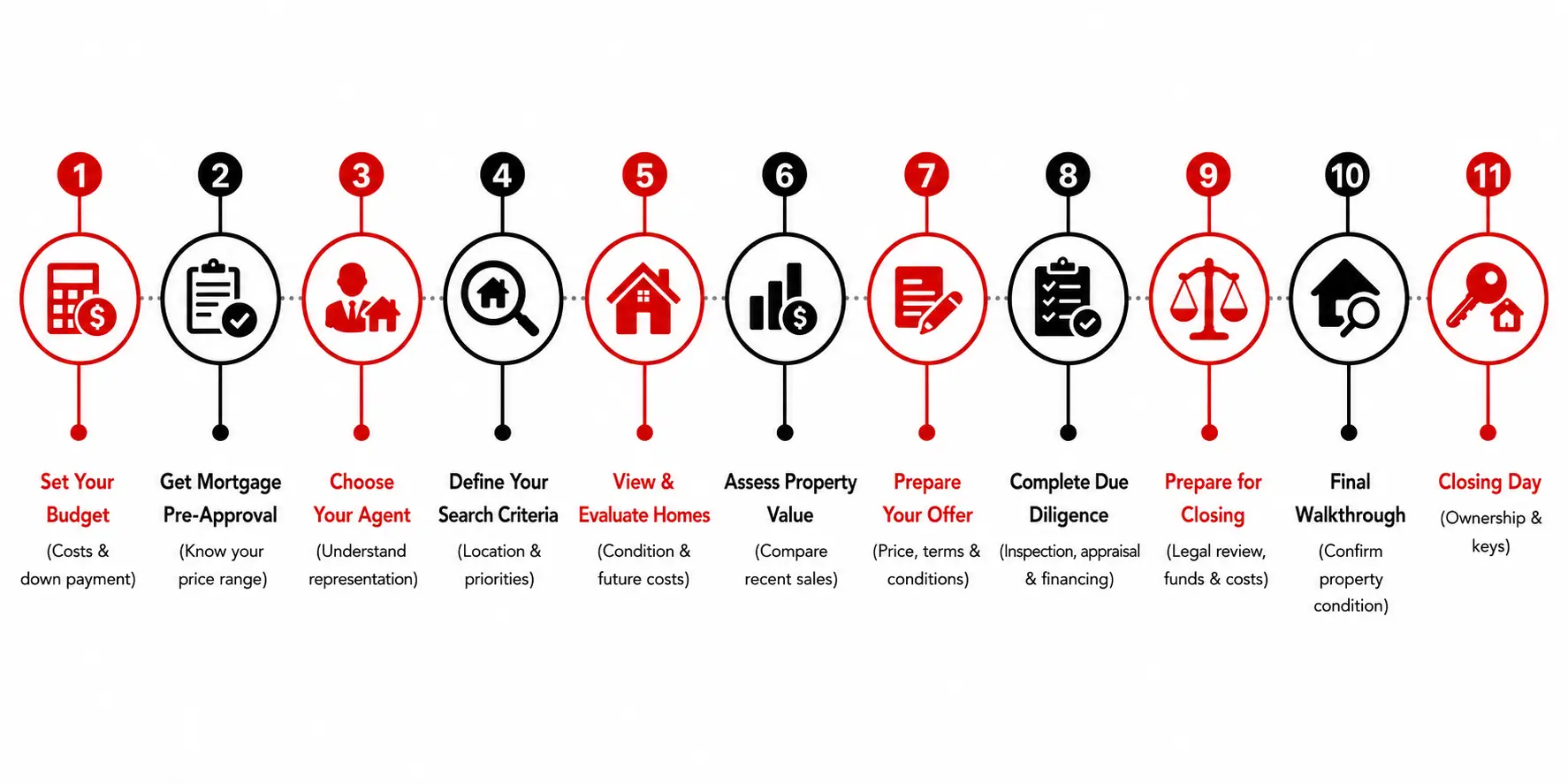
It is tempting to begin by looking at homes online, but your budget should come first. The amount a lender is willing to finance and the amount you are comfortable spending are not always the same thing. Once you own a home, the mortgage is only part of the monthly cost. You may also be paying for:
- property taxes
- home insurance
- utilities
- maintenance and repairs
- condo fees, if applicable
You will also need money beyond your down payment for legal fees, land transfer tax and other closing expenses. The goal is to choose a price that will remain manageable after you move in, not simply to spend the maximum amount for which you qualify.
If this is your first purchase, my First-Time Home Buyer Guide explains additional costs and common mistakes worth knowing about early.
Get Your Mortgage Pre-Approval in Place
Once you have a comfortable budget, speak with a lender or mortgage professional. A mortgage pre-approval can give you a more realistic buying range and help you focus on suitable properties.
Pre-approval is not final mortgage approval. After your offer is accepted, the lender will still need to review the property and complete the financing process.
Avoid taking on significant new debt without first speaking with your mortgage professional. A vehicle loan or another major credit obligation could affect your ability to qualify.
Be Clear About What You Actually Want
Most buyers begin with a wish list, but their priorities often change after seeing homes in person.
You may decide that a townhouse in the right location makes more sense than a detached house. You may also find that an older property offers more space and a larger lot than a newer home, but requires additional maintenance or renovations.
Separate your essential requirements from features that would simply be nice to have. Consider:
- location and commute
- schools and transit
- property type
- lot and outdoor space
- renovation needs
- how long you expect to stay
This is especially relevant in Mississauga. Port Credit, Streetsville, Erin Mills and Churchill Meadows can offer very different homes and neighbourhood experiences, despite being within the same city.
Choose Your Agent Before You Need to Make a Fast Decision
Arrange your representation before you find a property you suddenly want to buy.
Your agent should understand your budget, preferred areas, property type and priorities. You should also understand the representation agreement, the services being provided and any obligations you are accepting.
Once the right property appears, decisions can move quickly. Having these conversations beforehand allows you to focus on the home and the offer.
You can learn more about how I work with buyers in Mississauga and the GTA.
When You View a Home, Look Past the Staging
A bright kitchen, new flooring and professional staging can make a home feel impressive. It is equally important to consider what may be happening beyond the finishes.
During a showing, I tend to notice:
- signs of basement moisture
- drainage around the property
- roof and window condition
- visible renovation work
- repairs that may be approaching
My civil and environmental engineering background influences how I look at homes, particularly when there are questions about drainage, moisture, visible construction conditions or renovation quality.
This perspective does not replace the advice of a qualified home inspector, engineer or other specialist when one is needed. It can help identify issues and questions worth investigating before a buyer commits to the property.
If you are considering an older property, you may also find Buying an Older Home in the GTA? Check Structural Red Flags useful.
Decide What the Property Is Worth to You
Once you find a home you like, the conversation changes. Now you need to decide what you think the property is worth to you. The asking price is useful, but it should not be the only number you look at. Recent comparable sales, current competition, the condition of the home and the location all matter.
A home that may soon need a roof, windows or major repairs should not automatically be evaluated the same way as a comparable property where those items have already been addressed. It helps to decide what you are comfortable paying before negotiations start.
That makes it easier to stay disciplined if the offer becomes competitive.
What Actually Goes Into an Offer?
When you are ready to buy, the offer is prepared through an Agreement of Purchase and Sale. The price is important, but it is only one part of the agreement.
You may also be deciding on:
- the deposit
- closing date
- financing or inspection conditions
- fixtures and chattels
- what stays with the home
- other negotiated terms
If the seller sends back a counter-offer, read the entire agreement again. A different closing date or a change to a condition can matter just as much as a change in price. The important thing is to understand what you are agreeing to before you sign.
Your Offer Is Accepted. What Happens Now?
An accepted offer feels like the finish line, but there is still work to do. Depending on your agreement, you may now need to finalize financing, satisfy conditions, arrange insurance, complete further due diligence and send documents to your lawyer. If you are buying a condo, there may also be condominium documents and other matters that need to be reviewed.
This part of the purchase often moves quickly because several people are working at the same time: your lender, lawyer, insurer and real estate agent. Pay close attention to deadlines.
Plan for Closing Costs Before Closing Day
Your down payment is not the only money you need available. Closing costs in Ontario can include land transfer tax, legal fees, title insurance, property tax adjustments and other costs that depend on the transaction. Eligible first-time buyers may qualify for an Ontario land transfer tax refund, subject to current eligibility requirements.
Buyers purchasing in Toronto also need to account for the municipal land transfer tax. Your real estate lawyer handles the legal side of the purchase, including title matters, closing documents, funds and registration of ownership. Your lawyer will also tell you how much money needs to be available before closing.
Use the Final Walkthrough for What It Is Meant For
The final walkthrough is not another showing. It is your chance to confirm that the property is being delivered as expected.
Make sure included appliances and fixtures are still there, agreed work has been completed, and there is no significant new damage. If something important is different, speak with your agent and lawyer before closing.
Closing Day
On closing day, legal ownership of the property transfers to you. Your lawyer handles most of the work behind the scenes, including the funds, documents and registration.
One practical point buyers sometimes overlook is key timing. You should not assume you will have access first thing in the morning. Keys are generally released after the transaction has legally closed and your lawyer confirms everything is complete. Then the property is officially yours.
Frequently Asked Questions About Buying a Home in Ontario
What is the first step when buying a home in Ontario?
Start by understanding your finances. Know your down payment, your comfortable monthly budget and how much money you need to keep aside for closing costs. Mortgage pre-approval usually comes next.
How long does it take to buy a home in Ontario?
There is no standard timeline. Some buyers find a property quickly, while others search for months. Once an offer is accepted, the agreed closing date determines much of the remaining schedule.
What happens after an offer is accepted?
What closing costs should I expect?
They vary by transaction, but can include land transfer tax, legal fees, title insurance, adjustments and other purchase-related costs.
Do I need a home inspection?
A home inspection can provide useful information about the condition of a property. Whether you include an inspection condition depends on the home, the offer and your circumstances.
Conclusion
Home Buying Process in Ontario is easier when you understand what is happening before each decision arrives. Get the finances organized first. Be clear about what you are looking for. When you find a property, look at more than the finishes, understand the value, and make sure the offer terms work for you.
For buyers in Mississauga and the GTA, my approach combines real estate experience with a civil and environmental engineering background. That means I look at both the transaction and the property itself, including the questions that may be worth investigating before you commit.
This article provides general information only and is not legal, financial, tax, mortgage, engineering or home-inspection advice.